













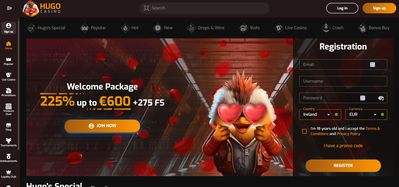
Hugo Casino Review For Users In Italy

A practical guide on account, games, payments, support, and mobile use of the platform available in Italy in 2026.

Fortune Gems 2 Slot

Table of Contents

  • The Dog House Megaways Slot
  • Lucky Joker 10 Extra Gifts Slot
  • Sword of Ares Slot
  • Floating Dragon Hold & Spin Slot
  • Leprechaun Riches Slot
  • Fruit Cocktail Slot
  • The Dog House Megaways Slot
  • Sword of Ares Slot
  • Fruit Million Slot
  • The Dog House Megaways Slot
  • Big Fisherman Slot
  • Big Fisherman Slot
  • Seven Books Unlimited Slot
  • Hugo Casino Fortune Slot
  • Sword of Ares Slot
  • Floating Dragon Hold & Spin Slot
  • 9 Mad Hats Slot
  • Floating Dragon Hold & Spin Slot
  • Big Bass Splash Slot
Reviews 1

How to Read Hugo Casino Review in 2026

When evaluating an online casino, the point isn't to see if the homepage looks elegant for five seconds. The point is to see if the account, menus, catalog, and cashier work well together when a user actually logs in to do something concrete. In 2026, this matters even more, because many logins happen from a phone, in brief moments, between one notification and another. If the path is confusing, the problem is felt immediately.

Imagine a simple situation. You have twenty minutes free in the evening, you open the portal and want to understand if everything is readable without effort. If in a few steps you find your balance, profile, cashier, and history, the platform starts well. If, on the other hand, the account forces you to guess where to go, trust quickly diminishes. For users in Italy, willing to use the service as adults and with attention to applicable rules, practical quality is worth more than any slogan.

A serious analysis, therefore, should not start with generic phrases like “it looks modern” or “it has nice graphics.” It should start with real actions: logging in, reading the account, understanding messages, checking a game section, finding support, setting a limit. A brand that holds up on these points gives a much more reliable impression than one that focuses only on appearance.

What to Observe on the First Visit

On the first visit, it's advisable to look at a few elements, but the right ones. Profile, balance, history, cashier, support, and self-control tools say more than many promises. You don't need to use everything right away. You need to understand if there is a logic and if the important sections are easily accessible. Think of a user who logs in from the couch, at the end of the day, with little mental energy: if the account is organized at that moment, the platform has already done an important part of its job.

When First Impressions Are Misleading

A platform can make a good first impression and then become complicated as soon as the player looks for something concrete. The opposite happens more rarely, but it does happen: a sober site that then proves to be very organized in real use. Imagine opening the portal and finding everything fast and bright, then looking for the history or an account detail and realizing that the information is not where you expected it to be. That's where the evaluation really changes.
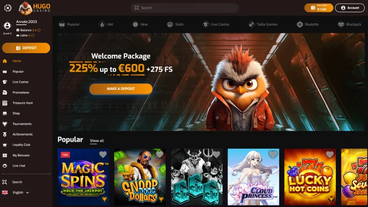
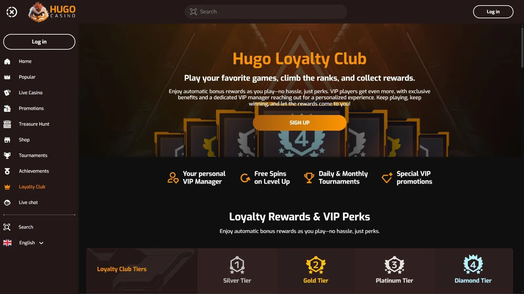
customer feedback 2

Account Access, Profile, and Initial Settings

Account access is more important than it seems. It's not just an entry door. It's the point from which the entire relationship with the platform begins: profile organization, security, ease of return, management of personal information. When this foundation is solid, subsequent visits also flow better.

Many users treat initial settings as a secondary detail. In practice, they are an investment of time that saves a lot later. Verifying email, number, credentials, and notification placement helps avoid getting stuck or confused just when you want to log in quickly. Imagine a morning with little time available: if the profile is already organized, login is clean, and there are no doubts about where to find basic functions.

Furthermore, the profile should not seem separate from the rest of the service. It should connect naturally to the cashier, limits, history, and support. When this happens, the account stops being a collection of pages and becomes a truly readable environment.

How to Set Up Your Account Without Rushing

The simplest way to start well is to treat the initial setup as a separate session. First, complete the profile, then check the data, then see where support, limits, and history are located. Only then does it make sense to move on to the catalog or the cashier. Imagine a user trying to do everything at once, from their phone, while also responding to messages: it is precisely in that context that small details are skipped and return later to create friction.

Catalog, Navigation, and Game Selection

The value of a casino doesn't just depend on how many games it shows, but on how it helps you choose. A huge but disorganized catalog is less useful than a well-filtered lobby, where categories, search, and return to main sections work clearly. The point isn't to have everything. The point is to quickly get to what you need at that moment.

3 reviews

The pace of the session matters a lot here. Some users log in for ten minutes, others for a bit longer. In both cases, the platform should help with the choice, not turn it into a dispersive walk. Imagine wanting to test only two categories and then exit. If the filters are readable and returning to the lobby is immediate, the portal supports your plan. If every step takes you further and further from the starting point, even a rich catalog becomes tiring.

On small screens, the difference is felt even more. Buttons that are too close, compressed sections, or long menus completely change the perception of the experience. That's why navigation quality matters at least as much as content variety.

How to Read Hugo Casino RTP Usefully

When a reference to theoretical return is encountered, it's easy to overestimate it. In reality, it's information that only makes sense within a broader context: session duration, game category, current objective, attention with which the account is being used. By itself, it doesn't describe the experience and shouldn't be read as a personal promise.

Imagine comparing a few titles before starting. You find an interesting piece of data and think it's enough to decide. Then you remember you're logging in from your phone, you have little time, and you want to maintain a light pace. In that case, it's not that number that really guides the choice. It matters more if the game is readable, if the session stays under control, and if exiting is as simple as entering.

Even the way the portal presents these details matters. If the cards are clear and the filters work, everything becomes more useful. If, on the other hand, each piece of data appears fragmented, even potentially interesting information loses value and just creates noise.

Why Context Matters More Than the Number

A single value doesn't tell you how you'll feel during the session, nor how you'll use your account at that moment. Imagine a short visit, made mainly to see if the portal remains comfortable. In that case, a clear environment is more needed than a detail read impulsively. That's why the most discerning players use this data as support, not as an absolute shortcut.

Cashier, Payments, and Reading Transactions

The cashier is the point where the service stops being just an interface and becomes truly operational. It's not enough to see a deposit button or a figure at the top. The player must understand where to read transactions, how to check an open status, where system messages appear, and whether recent operations can be reconstructed effortlessly.

A well-built platform makes this information almost obvious. This doesn't mean everything has to be minimal. It means the right details are in the right place. When the player opens the cashier, they should perceive order. If they feel the need to guess the meaning of every riga, something isn't working well enough.

Imagine an evening session that just ended. You want to understand what happened to your balance and if there are any open actions. If it only takes a few seconds to read the main steps, the account is working well. If, on the other hand, it takes multiple entries and checks to get a clear picture, the cashier becomes a point of friction.

Many cautious users take a smart step: they open this section even before they really need it. Not to act immediately, but to understand the logic. This small habit greatly reduces the sense of pressure later, when a concrete decision needs to be made.

Account Area

User Utilities

Profile

Helps to keep personal data organized

History

Shows what happened in the last sessions

Transaction Status

Indicates if a step is closed or still open

Personal Limits

Helps to keep the budget within chosen limits

System Messages

Flag missing or review-needed steps

Support

Offers a quick way for specific questions

What to Check Before the First Move

Before actually using the cashier, it's worth checking three things: if the profile is correct, if the history is readable, and if the system messages are understandable at a glance. Imagine wanting to sort everything out in a few minutes. If these basics are already clear, every subsequent step seems simple. If, however, you start without looking at the structure, even a small detail can seem more complicated than necessary.

Why History Is More Important Than It Seems

History isn't just for looking at the past. It serves to give coherence to the present. When the latest transactions are readable, the player better understands their rhythm and makes decisions more clearly. Imagine returning the next day and wanting to reconstruct the last steps in an instant. It is at that moment that an organized history shows its true value.

How to Use Hugo Casino Reviews Wisely

Opinions read online can be a useful background, but they don't replace direct use. A user judges with their own phone, their own time, and their own way of navigating the account. Imagine two people using the same brand: one from a desktop calmly, the other from a mobile at the end of the day. It's normal for them to report different experiences. Therefore, external impressions help, but practical verification remains decisive.

Assistance, Short Sessions, and Time Control

Assistance becomes important when a specific doubt arises. A unclear message, a misunderstood step, a history entry that is not convincing. In these cases, it's not necessary to write a lot. It's necessary to write well. Saying where you were, what operation you had just performed, and what text appeared on the screen helps much more than a generic phrase.

Imagine seeing a notification in the cashier that you don't understand. If you contact support precisely, the response can be truly useful. If, however, you send a vague message, the conversation starts from scratch and gets longer. The quality of assistance also depends on how the platform enables you to describe the problem clearly.

Then there is an even more practical issue: time. Many accesses today are quick, especially from mobile. This makes visits convenient, but also easier to extend without realizing it. That's why a good account should clearly show limits, session reminders, breaks, and self-exclusion tools. Not as hidden options to be used only in emergencies, but as normal parts of personal control.

Imagine logging in late at night with the idea of staying ten minutes. If you haven't decided on a duration before starting, every light step pushes you to take another. In a short time, a quick visit changes shape. The most disciplined users do the opposite: they set time and budget first, then log in. The best platform is the one that makes it easy to respect this choice.

When a Break Is the Smartest Choice

A break doesn't mean something went wrong. It often means the player has realized their goal has already been achieved. Imagine having checked your account, browsed the catalog, read your transactions, and done what you wanted to do. Staying longer just out of inertia rarely improves the experience. Leaving at the right moment, however, is a sign of good management.

FAQ

The best way is to do a quick technical test of a few minutes. Log in, look for balance, profile, cashier, and history, then log out. If you find everything naturally and without returning to the same screens multiple times, the structure is likely suitable for short, organized sessions.

It is worth registering when you really have a few minutes of calm. Doing so while you are doing other things increases the risk of small but annoying errors, which then reappear precisely at the moments when you want to use the account quickly and easily.

It depends on the objective. For a quick check or a brief visit, the phone may be sufficient. For reading denser sections, arranging the profile, or clarifying doubts about the cashier, a larger screen often helps to see the entire context better.

It is worth checking if the profile is correct, if the history is easy to read, and if the system messages are clear. With these basics already verified, the next steps become much simpler and less stressful.

Because they work better when chosen in advance, not when the session has already started and the pace has shifted. Deciding in advance how much time and resources to dedicate to the account helps maintain balance and makes every visit more consistent.

The first step is to check the context: what section you were in, what you had just done, and if the history shows anything related. If the doubt remains, it is useful to contact support with a precise and brief description of the situation.

The right time comes when the objective of the visit has been achieved or when the time decided before entering has expired. Prolonging a session just out of inertia tends to make the account less readable and the experience less conscious.